DRAINS & SEWER · September 16, 2026 · 8 MIN READ
Sewer Line Repair in Norwalk, CA: How to Know You Need It
By Geovanny · Sigma Plumbing & Rooter
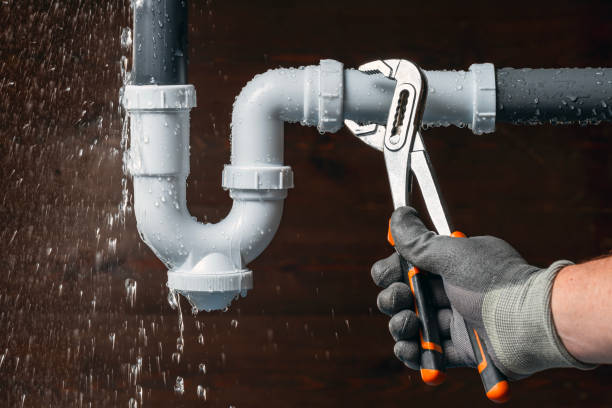
Most sewer line calls do not start with the words "sewer line." They start with a slow drain, a toilet that gurgles when the washing machine empties, or a shower that backs up for no obvious reason. The difference matters, because a fixture clog is a short job and a main line problem is a different scope of work entirely.
How to tell a main line problem from a fixture clog
A clog at a single fixture affects that fixture only. A main line problem affects everything downstream of it. Watch for these patterns:
- More than one fixture is affected at once. The toilet is sluggish and the tub is slow on the same day.
- The lowest fixture backs up first. Wastewater takes the path of least resistance, so a downstairs shower pan or a floor drain usually shows the problem before anything upstairs does.
- Air moves where it should not. A toilet that bubbles when the washer drains, or a sink that gurgles when you flush, means water is displacing air in a line that cannot clear.
- Smell outside, not inside. A sewage odor near a cleanout or in a section of yard points at the lateral rather than at a dry P-trap indoors.
If you are seeing two or more of those together, stop running water through the system and get the line looked at. Continuing to use the fixtures is how a slow line becomes a backup into the house.
Why Norwalk homes see this more than newer construction
Much of Norwalk's housing stock predates modern sewer materials. Laterals from that era are typically vitrified clay or cast iron. Both work, and both have a common failure mode: the joints. Clay is laid in short sections with a joint every few feet, and cast iron corrodes from the inside out along the bottom of the pipe where water sits.
Add mature street trees and parkway landscaping and you get the most common cause of main line trouble in older Southern California neighborhoods: root intrusion. Roots do not break into sound pipe. They find a joint that is already weeping, follow the moisture, and then grow inside the line until they form a mat that catches everything that passes. Soil movement across wet and dry seasons opens those joints a little further each year.
A camera inspection is the diagnosis, not a guess
Snaking a line and having it drain again tells you the line is open. It does not tell you why it closed. A sewer camera run from the cleanout answers the questions that determine the repair:
- Where is the defect, measured in feet from the access point?
- What is it — roots, a belly holding water, an offset joint, a crack, a collapse, or a foreign object?
- What material is the pipe, and what condition is the rest of the run in?
- Is the defect on private property or past the property line in the city's portion?
That last question is not academic. Responsibility for the lateral and responsibility for the main are not the same thing, and a camera run with footage is what settles it.
The repair options, and what each one actually requires
There is no single correct sewer repair. The condition of the pipe decides the method.
Spot repair
If the camera shows one failed section and sound pipe on either side of it, a spot repair replaces that section only. It is the least invasive option when the rest of the line supports it.
Pipe bursting
A bursting head is pulled through the existing line, fracturing the old pipe outward while drawing new HDPE in behind it. It needs an access pit at each end rather than a continuous trench, which is why it is attractive where a driveway or mature landscaping sits over the line. It requires a line that is still continuous enough to pull through.
Cured-in-place lining
A resin-saturated liner is inverted into the host pipe and cured, forming a new pipe inside the old one. It handles root intrusion at joints well because it seals the joints. It does not fix a belly, because a liner follows the grade of the pipe it is installed in — if the line sags and holds water now, it will still sag after lining.
Open trench replacement
When the line has collapsed, when grade has to be corrected, or when the existing pipe cannot be pulled or lined, the line gets excavated and replaced. It is the most disruptive option and sometimes the only honest one.
Permits and inspection
Sewer work in Norwalk is permitted work, and a permitted job ends with a city inspection sign-off. That sign-off is the document that protects you when you sell the house. Sigma Plumbing & Rooter pulls and closes the permit as part of every job.
What to ask before you authorize anything
- Can I see the camera footage, and can I have a copy of it?
- How many feet from the cleanout is the defect, and is that on my side of the property line?
- Which repair method are you recommending, and what did you rule out?
- Is this permitted, and who pulls it?
- What does the line look like after the repair — will you re-camera it?
A contractor who can answer those with specifics has actually looked at your line. One who cannot is quoting a method, not diagnosing a problem.
Frequently Asked Questions
How do I know if it is my sewer line or just a clogged drain?+
A single slow fixture is usually a fixture clog. When two or more fixtures are affected at once, when the lowest fixture in the house backs up first, or when a toilet bubbles as the washer drains, the main line is the likely cause.
Why do sewer lines fail so often in older Norwalk homes?+
Older laterals are typically clay or cast iron. Clay is laid in short sections with a joint every few feet and cast iron corrodes along the bottom of the pipe. Roots find those weeping joints, follow the moisture and grow inside the line.
Will a camera inspection tell you which repair I need?+
Yes. The camera shows where the defect is in feet from the access point, what it is, what the pipe is made of, and whether it sits on your side of the property line. Those four answers decide the repair method.
Does sewer work require a permit?+
Yes. Sewer repair and replacement are permitted work and the permit closes with a city inspection sign-off. Sigma Plumbing & Rooter pulls and closes the permit as part of every job.
Have we helped you? Please leave a quick review on our Google Business Profile.